3D Printing
The 3D PrintHive gives students access to a cutting-edge range of 3D printing technologies: FFF 3D printers, SLS nylon, DLP resin and metal 3D printing using Markforged’s Metal X system. These tools turn designs into tangible prototypes, helping students test feasibility, identify flaws and refine ideas early.
Beyond prototyping, we support the production of high-quality, functional end-use parts for a range of applications. As a process, it offers students a valuable step in the design evaluation process to assess designs in real-world conditions before committing to more involved subtractive manufacturing with more resilient materials.
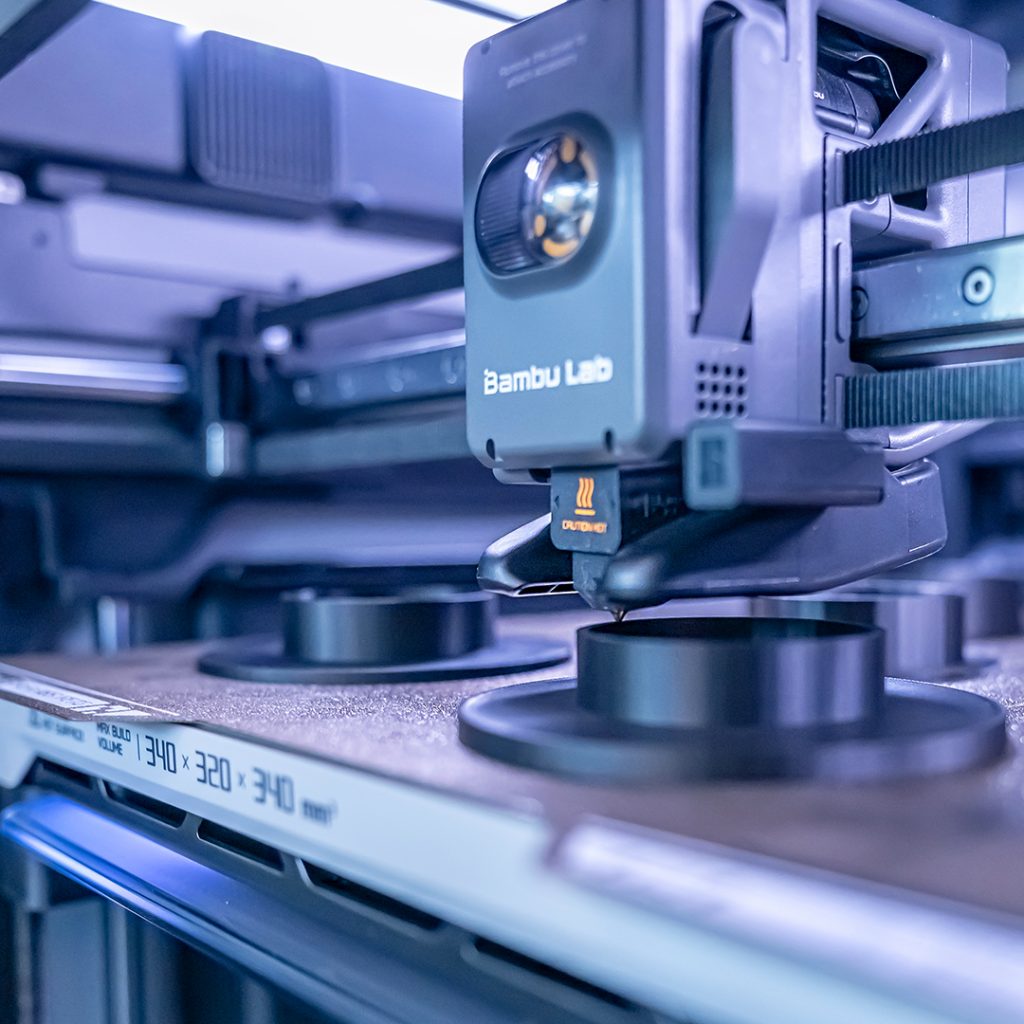
Fused Filament Fabrication
Our range of Bambu Lab and Markforged 3D printers allows for quick and inexpensive prototyping using materials like PLA, ABS, and fibre-reinforced nylon.

DLP Resin
UV curable resin is selectively hardened by shining high-powered UV light through a high-resolution display screen. These printers are capable of producing very high-quality prints, with a surface finish almost rivalling injection moulding, and handle fine details for miniature models and small-scale lab experiments with ease.

Markforged Metal X
Using Markforged’s fused filament fabrication technology the Metal X system allows printing with a variety of metals, including 17-4PH stainless steel, copper, and exotic super-alloys like Inconel with just a quick sweep out and a nozzle change.
Printed parts are run through a solvent wash and a sintering process to turn them from “green” metal-filled plastic into solid metal components.
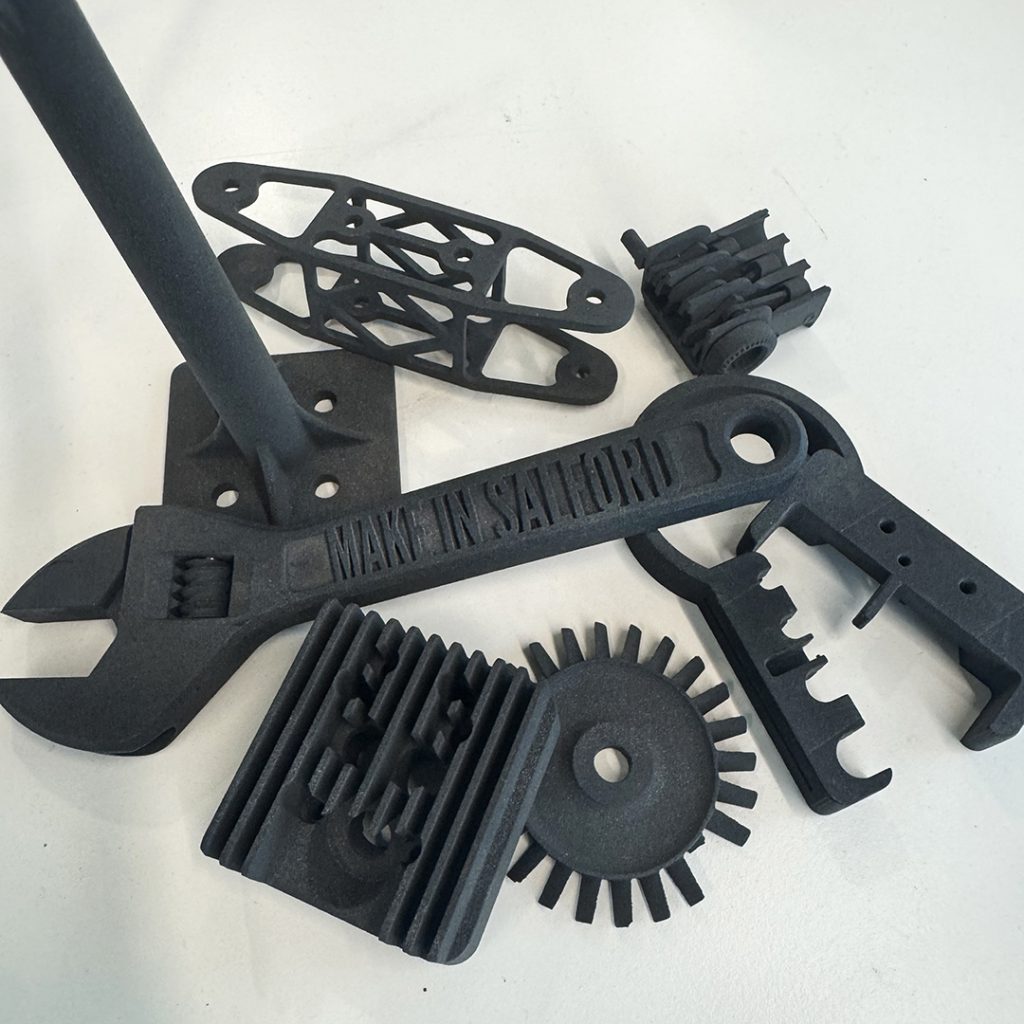
SLS Nylon
The Formlabs Fuse prints with nylon powder, using a laser to selectively sinter the powder into a solid form. Because parts being printed are surrounded by unsintered powder, there is no need for additional support structures – once the excess material has been cleaned off the parts are finished and ready to use.